Visible Light Waves
понедельник, 25 декабря 2023 г.

среда, 20 декабря 2023 г.
Types of Light
To understand
light you have to know that what we call light is what is visible to us. Visible light is the light that humans can see. Other animals can see different
types of light. Dogs can see only shades of gray and some insects can see light
from the ultraviolet part of the spectrum. The key thing to remember is that
our light is what scientists call visible light.
Scientists also call light electromagnetic radiation. Visible light is only one small portion of a
family of waves called electromagnetic (EM) radiation. The entire spectrum of these EM waves
includes radio waves, which
have very long wavelengths and both gamma rays and cosmic
rays, which are at the other end of the spectrum and have very small
wavelengths. Visible light is near the middle of the spectrum.
It's all Energy
The key thing
to remember is that light and EM radiation carry energy. The quantum theory suggests that
light consists of very small bundles of energy/particles; it's just that
simple. Scientists call those small particles photons, and the wavelength
determines the energy and type of EM radiation, and the number of photons tells
you how much radiation there is. A lot of photons give a brighter, more intense
type of light. Fewer photons give a very dim and less intense light. When you
use the dimmer switch on the wall, you are decreasing the number of photons
sent from the light bulb. The type of light is the same while the amount has
changed.
Different Speeds of
Light?
As far as we know, all types of light move at
one speed when in a vacuum. The speed of light in a vacuum is 299,792,458
meters per second. That speed is really fast, but even when you're traveling
that fast, it takes a while to get places in space. It takes about seven minutes
for light from the Sun to reach Earth. It takes over four years for the light
from our Sun to get to the nearest star. It would take a particle of light over
100,000 years to get from one side of our galaxy to the other side. All of
those values are light moving through a vacuum. You can slow light down in
other substances such as the atmosphere, water, or a diamond. Light moves at
about 124,000,000 meters per second (less than half the speed in a vacuum) in a
diamond.
вторник, 5 декабря 2023 г.
Communications
|
Communications |
|
One of the great changes to
our world over the past 100 years has been the invention of electronic
communications. It all started with the telegraph and since then new inventions
and innovations have created an information age that includes smart phones and
high definition video over the internet.
Telegraph
The invention that got electronic communications
started was the telegraph. It was invented by Samuel Morse in 1836. He also
developed the Morse Code which allowed the signals that the telegraph sent over
the wires to represent words and phrases.
Telephone
Around 40 years after the telegraph, Alexander
Graham Bell received the patent for the telephone. Now instead of just beeps of
sound, a person's voice could be transmitted over long distances of electric
wires. Later inventions like faxes and modems would allow other information to
pass over the same wires. Large switching networks were built throughout the
world allowing telephones in nearly every home to connect with each other.
Fiber optic tubes of glass use light pulses to communicate
Fiber Optics
As the amount of information has grown, more and
more data needs to be transmitted over long distances. One of the ways to send
data faster is with fiber optics. Fiber optics are long skinny tubes (like
wires) made of glass. Instead of electricity they transmit light. Light can
travel at much faster speeds and over longer distances than electrical pulses.
There are fiber optic connections today that can send 100 billion signals per
second!
Radio Frequency
Radios have been used for a long time, but in
the 1990s cell phones started to become popular. Cell phones send information
using radio frequencies through the air. New technologies have allowed for
faster signals and even video to be sent to and from cell phones.
Cell phones use radio frequencies to communicate through the air
Internet
Perhaps the most important invention in the area
of electronic communications during recent times is the internet. The internet
is made up of millions of electrical and fiber optic links. These links form a
network that allows information to get passed and "switched" all over
the world. More information is now available at your fingertips and on your
computer at home than you could hope to read in a lifetime.
Fun facts about Electronic Communications
- There are around 250 billion emails sent
every day. Around 80% of these are spam.
- Around 20 hours of video are uploaded to
YouTube every minute.
- Fiber optics are good because they use less
energy and are better for the environment than electrical wires. They are also very resistant to
weather.
- The first telephone pole was built in 1876.
- There are over 4 billion cell phones in the
world. Over 100 million cell phones are thrown away every year.
- The first cell phone was invented by the
company Motorola.
четверг, 23 ноября 2023 г.
Digital Electronics
|
Digital Electronics |
Digital electronics are
electric circuits that work on only two fixed values: "1" and
"0". They use a series of 1's and 0's to store and communicate
information. They can also perform math using just 1's and 0's. This is
called Boolean
math or
Boolean logic.
How do they get just 1's and 0's?
In most digital electronic circuits when the
voltage of the circuit is positive and near the supply voltage it represents a
1. This is also called HIGH. When the voltage is close to the ground level (or
zero), it represents a 0, which is also sometimes called LOW. With these two
signals most anything can be stored and communicated including the picture on
the screen you're looking at right now. But it takes a LOT of these signals
running VERY fast!
What are electronic gates?
In digital electronics, gates are electrical
functions that are performed on 1's and 0's. Sort of like simple math. One
example of this is the AND gate. There are two inputs and one output to an AND
gate. The output is only a 1 if both inputs are a 1. If either input is a 0,
the output is a 0. An even simpler gate is the Inverter. In this case there is
one input and one output. If a 1 is input, then a 0 is output. If a 0 is input
then a 1 is output. It just Inverts the signal.
A
logic AND gate with two inputs and one output
What are electronic chips?
Electronic chips are a whole bunch of electronic
gates put into one small area. These chips can have millions and millions of
gates in order to do all sorts of complex stuff. There are chips that do
graphics for your computer screen, chips that have lots of memory for saving
data, and chips that run programs like your computer's CPU. To make electronic
chips, special materials called semiconductors are used together with expensive
precision equipment. Hundreds of engineers may spend years just to design and
invent one complex electronic chip.
Integrated Circuit computer chip called a CPU
Where are they used?
Digital electronics are used throughout the
world including in computers, iPods, video games, televisions, cameras, cell
phones, and cars. Although digital electronics are a relatively new invention
in the world, most of us could hardly imagine a world without them.
Fun facts about Digital Electronics
- The main semiconductor used in electronic
chips is silicon. Silicon is the most abundant element in the
Earth's crust after oxygen.
- A lot of the internet information is sent
over fiber optics. With fiber optics light is used instead of electricity
to send the information.
- The first computer chip was invented by
Jack Kilby while working for the company Texas Instruments.
- In 2011 Apple became the largest buyer of
computer chips in the world because of the iPhone.
понедельник, 20 ноября 2023 г.
Electricity in Nature
Electricity in Nature
Electricity is not only found
in power lines and electronics made by man, but is also found in nature. In
fact electricity is all around us. We see it in lightning storms, animals use
it as a defense, even our bodies use it to send messages to our muscles.
Lightning
|
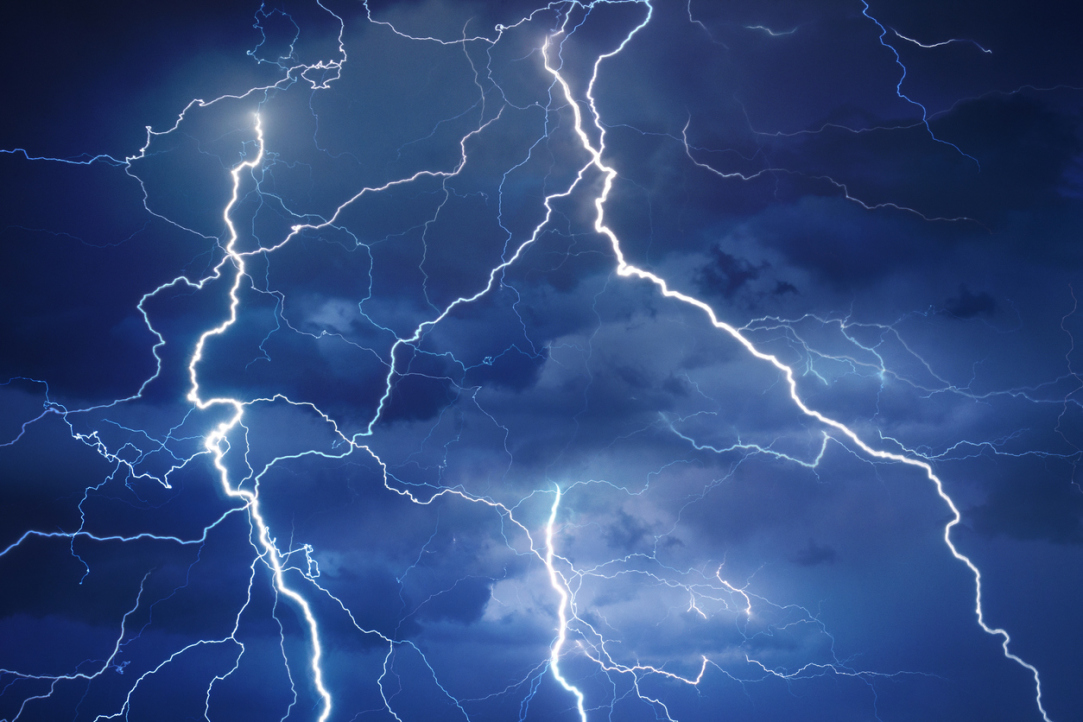
One of the most fantastic displays of electricity in nature is lightning.
Lightning occurs when large amounts of electrostatic energy builds up
in clouds from
the energy of storms. When
electrically charged regions of clouds discharge their energy, a large flash
of electricity can be seen in the sky. Lightning may occur from cloud to
cloud or it can occur from cloud to the ground. Lightning strikes carry huge amounts of energy. A typical lightning strike carries an electric current of
over 30,000 amps and delivers 500 megajoules of energy.
|
 |
Lightning also creates a loud noise called
thunder. This is because the air within lightning gets so hot, that it
transforms into plasma for a short period of time. When the molecules of air
turn from gas to plasma, their expansion causes a shockwave that we hear as
thunder.
Animals
Some animals use electricity to survive in
nature. Many of these animals are found in the ocean where some use electricity
to detect objects around them (sort of like seeing) and others use electricity
to fend off predators or even hunt for food.
One of the most famous of the electric animals
is the electric eel. The electric eel can produce large amounts of electricity,
enough to even kill a human or stun a large horse. The eels typically swim into
a school of fish, discharge a large amount of electricity, and then dinner is
served!
Another example of animals using electricity is
electroreception. Many fish such as sharks, lampreys, and catfishes have the
ability to generate electric fields and then use these fields to detect objects
around them. This helps them to "see" in dark areas and to sense
hidden prey.
Human Body
Not only can we see electricity at work in
nature, we are constantly using electricity in our bodies. Every time we move a
muscle, it's the result of an electrical signal being sent from our brain to
our muscles telling them to move. We actually have a complex system of nerves
throughout our bodies that use electric signals to control everything we do.
Static Electricity
Lightning isn't the only form of electrostatic
energy we see in nature. Static electricity charges build up all around us. You
probably have noticed static electricity when you went down a slide at the park
and your hair stood up strait. The friction from the slide on your body caused
a build up of charge that made your hair stand up. Sometimes you can even build
up a charge on your body that will shock someone else when you touch them. This
is static electricity.
The Earth
Deep inside the Earth huge electric currents are
generated from the spin of
the Earth's iron core. These electric currents in turn cause a
magnetic field that extends well beyond the surface
of the Earth and into outer space.
The Earth's magnetic field is important because
it protects the Earth from the solar wind of the Sun. Without the protection of
magnetic field, there would likely be no life on Earth. The magnetic field also
enables the use of compasses to tell the direction.
пятница, 17 ноября 2023 г.
Uses of electricity
|
Uses of electricity |
|
We use electricity constantly
in our daily lives. It is one of the most important types of power and energy
that we use.
Electricity in our House
Electricity travels to our house over power
lines from a big power plant somewhere far away. Your parents actually have to
pay for how much electricity is used. There is an electric meter outside of
your house that keeps track of this. The more the lights are on or the TV is
running, the higher the bill will be from the electric company.
Once the power comes to our house, it gets sent
out on wires to sockets in the walls. We can plug all sorts of things into
these sockets and use the power from electricity. In our homes we power lights,
air conditioning, televisions, ovens, and more from electricity. Without it,
we'd be bored, hot, and sitting in the dark.
Batteries
Some electricity comes from batteries. Batteries
use chemicals to store up electricity that can power devices like cell phones,
radio controlled cars, handheld video games, and flashlights. Batteries run out
of power after a while and either need to be recharged or recycled. Remember to
always recycle your batteries as there are dangerous chemicals in them!
Other uses
Electricity is used in cars too. There is a big
battery to help the engine get started. Then the engine generates electricity
for the radio, lights, and other cool features. Some cars run 100% on
electricity by using big batteries that get charged up from a wall socket.
Electricity also can make magnetism. This can be
used to create giant powerful magnets as well as fast and quiet magnetic
trains. Electric motors generate magnetism to turn the motor and cause movement
for all sorts of uses.
History
One of the first great uses of electricity was
for communication using Morse Code and the Telegraph in 1840. This allowed
messages to be sent long distances in an instant. After that came the telephone
and the radio and, in 1880, electric light. These inventions and the use of
electricity changed the world. Electricity continued to change the world with
new inventions such as the TV and, even more recently, the personal computer
and the cell phone.
Fun facts about the Uses of Electricity
- 25% of the city of San Francisco's energy
is generated by wind power.
- Electric eels use electricity to ward off
enemies. They can produce a shock of around 500 volts.
- Our bodies use electricity to communicate
including telling our heart to keep beating.
- Two famous scientists, Thomas Edison and
Nikola Tesla, once had an argument over what kind of electricity we should
use in our homes, AC or DC. Tesla won and AC is delivered to most homes
still today.
- Electricity was first used in homes for
lighting.
вторник, 17 октября 2023 г.
Basic concepts of electricity
Basic concepts of electricity
What are some important things to know about electricity?
- Conductors and insulators - Conductors are materials that allow electricity to flow easily. Most types of metal are good conductors, which is why we use metal for electrical wire. Copper is a good conductor and isn't too expensive, so it's used a lot for the wiring in homes today.
Insulators are the opposite of conductors. An insulator is a material that doesn't carry electricity. Insulators are important because they can protect us from electricity. Materials like rubber, plastic, and paper are good insulators. - Voltage - Voltage is the name for the electric force that causes electrons to flow. It's the measure of potential difference between two points in the circuit. Voltage may come from a battery or a power plant.
- Current - Current is the measure of the flow of electrons in a circuit. Current is measured in Amps or Amperes.
- Power (Watts) - The power or energy used by a circuit is measured in Watts. You can calculate the number of Watts by multiplying the Voltage times the Current. When your parents get their electrical bill it's generally in kilowatt hours. This is the measurement of power over time or how much power was used that month.
- Resistance - Resistance measures how well a material or object conducts electricity. Low resistance means the object conducts electricity well, high resistance means the object does not conduct electricity well.
A battery can act as a source of electricity in circuits. It stores up electric power and then provides a voltage across a circuit causing power to flow through the circuit.
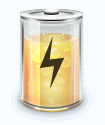
Batteries use chemicals that react to produce electricity. They have a positive terminal called the cathode and a negative terminal called the anode. When a circuit with a load is placed across the anode and cathode, the chemicals react causing electricity to flow through the circuit. The chemicals in batteries only last so long, so batteries have a limited amount of electricity and eventually will run out.
Alternate and Direct Current
There are two main types of current used in electrical systems today: alternate current (AC) and direct current (DC). Batteries, and most electronics, use direct current. This is where current always flows in one direction. Power stations that generate power for our homes generate current that constantly changes direction (60 times each second). Therefore the power that we get from our wall outlets is AC current.
Static Electricity
Sometimes electric charges can build up on the surface of objects. This is called static electricity. When you put on your clothes and they sometimes "stick" to your body or have an attraction to you, this is static electricity. When your hair sometimes goes straight up for no reason, this can be static electricity. If you rub a balloon against your clothes, you can build up a static electricity charge on the balloon that will cause it to stick to a wall. Static electricity can sometimes damage electronic components. There are anti-static bags and other ways to protect components from getting damaged.
Подписаться на:
Сообщения (Atom)