понедельник, 20 ноября 2023 г.

Electricity in Nature


Electricity in Nature

Electricity is not only found in power lines and electronics made by man, but is also found in nature. In fact electricity is all around us. We see it in lightning storms, animals use it as a defense, even our bodies use it to send messages to our muscles.

Lightning

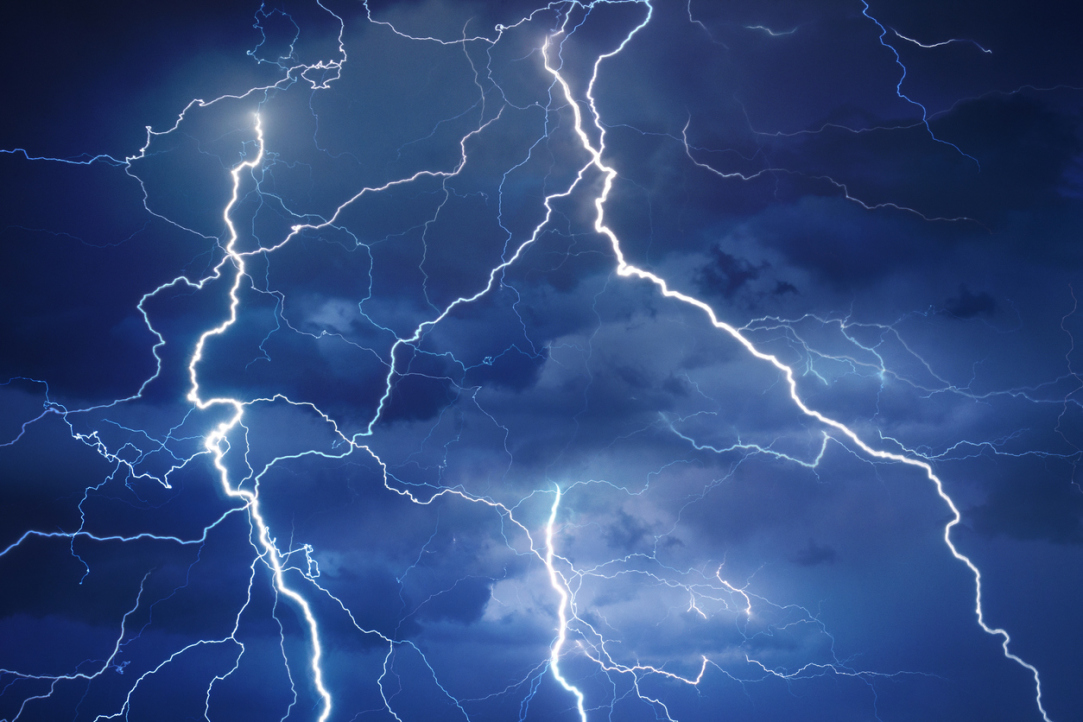
One of the most fantastic displays of electricity in nature is lightning. Lightning occurs when large amounts of electrostatic energy builds up in clouds from the energy of storms. When electrically charged regions of clouds discharge their energy, a large flash of electricity can be seen in the sky. Lightning may occur from cloud to cloud or it can occur from cloud to the ground.

Lightning strikes carry huge amounts of energy. A typical lightning strike carries an electric current of over 30,000 amps and delivers 500 megajoules of energy.


Lightning also creates a loud noise called thunder. This is because the air within lightning gets so hot, that it transforms into plasma for a short period of time. When the molecules of air turn from gas to plasma, their expansion causes a shockwave that we hear as thunder.

Animals

Some animals use electricity to survive in nature. Many of these animals are found in the ocean where some use electricity to detect objects around them (sort of like seeing) and others use electricity to fend off predators or even hunt for food.

One of the most famous of the electric animals is the electric eel. The electric eel can produce large amounts of electricity, enough to even kill a human or stun a large horse. The eels typically swim into a school of fish, discharge a large amount of electricity, and then dinner is served!

Another example of animals using electricity is electroreception. Many fish such as sharks, lampreys, and catfishes have the ability to generate electric fields and then use these fields to detect objects around them. This helps them to "see" in dark areas and to sense hidden prey.

Human Body

Not only can we see electricity at work in nature, we are constantly using electricity in our bodies. Every time we move a muscle, it's the result of an electrical signal being sent from our brain to our muscles telling them to move. We actually have a complex system of nerves throughout our bodies that use electric signals to control everything we do.

Static Electricity

Lightning isn't the only form of electrostatic energy we see in nature. Static electricity charges build up all around us. You probably have noticed static electricity when you went down a slide at the park and your hair stood up strait. The friction from the slide on your body caused a build up of charge that made your hair stand up. Sometimes you can even build up a charge on your body that will shock someone else when you touch them. This is static electricity.

The Earth

Deep inside the Earth huge electric currents are generated from the
spin of the Earth's iron core. These electric currents in turn cause a magnetic field that extends well beyond the surface of the Earth and into outer space.

The Earth's magnetic field is important because it protects the Earth from the solar wind of the Sun. Without the protection of magnetic field, there would likely be no life on Earth. The magnetic field also enables the use of compasses to tell the direction.

пятница, 17 ноября 2023 г.

Uses of electricity


Uses of electricity


We use electricity constantly in our daily lives. It is one of the most important types of power and energy that we use.

Electricity in our House

Electricity travels to our house over power lines from a big power plant somewhere far away. Your parents actually have to pay for how much electricity is used. There is an electric meter outside of your house that keeps track of this. The more the lights are on or the TV is running, the higher the bill will be from the electric company.

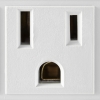
Once the power comes to our house, it gets sent out on wires to sockets in the walls. We can plug all sorts of things into these sockets and use the power from electricity. In our homes we power lights, air conditioning, televisions, ovens, and more from electricity. Without it, we'd be bored, hot, and sitting in the dark.

Batteries

Some electricity comes from batteries. Batteries use chemicals to store up electricity that can power devices like cell phones, radio controlled cars, handheld video games, and flashlights. Batteries run out of power after a while and either need to be recharged or recycled. Remember to always recycle your batteries as there are dangerous chemicals in them!

Other uses

Electricity is used in cars too. There is a big battery to help the engine get started. Then the engine generates electricity for the radio, lights, and other cool features. Some cars run 100% on electricity by using big batteries that get charged up from a wall socket.

Electricity also can make magnetism. This can be used to create giant powerful magnets as well as fast and quiet magnetic trains. Electric motors generate magnetism to turn the motor and cause movement for all sorts of uses.

History

One of the first great uses of electricity was for communication using Morse Code and the Telegraph in 1840. This allowed messages to be sent long distances in an instant. After that came the telephone and the radio and, in 1880, electric light. These inventions and the use of electricity changed the world. Electricity continued to change the world with new inventions such as the TV and, even more recently, the personal computer and the cell phone.


Fun facts about the Uses of Electricity

  • 25% of the city of San Francisco's energy is generated by wind power.
  • Electric eels use electricity to ward off enemies. They can produce a shock of around 500 volts.
  • Our bodies use electricity to communicate including telling our heart to keep beating.
  • Two famous scientists, Thomas Edison and Nikola Tesla, once had an argument over what kind of electricity we should use in our homes, AC or DC. Tesla won and AC is delivered to most homes still today.
  • Electricity was first used in homes for lighting.

вторник, 17 октября 2023 г.

Basic concepts of electricity

Basic concepts of electricity


What are some important things to know about electricity?
  • Conductors and insulators - Conductors are materials that allow electricity to flow easily. Most types of metal are good conductors, which is why we use metal for electrical wire. Copper is a good conductor and isn't too expensive, so it's used a lot for the wiring in homes today.

    Insulators are the opposite of conductors. An insulator is a material that doesn't carry electricity. Insulators are important because they can protect us from electricity. Materials like rubber, plastic, and paper are good insulators.


  • Voltage - Voltage is the name for the electric force that causes electrons to flow. It's the measure of potential difference between two points in the circuit. Voltage may come from a battery or a power plant.


  • Current - Current is the measure of the flow of electrons in a circuit. Current is measured in Amps or Amperes.


  • Power (Watts) - The power or energy used by a circuit is measured in Watts. You can calculate the number of Watts by multiplying the Voltage times the Current. When your parents get their electrical bill it's generally in kilowatt hours. This is the measurement of power over time or how much power was used that month.


  • Resistance - Resistance measures how well a material or object conducts electricity. Low resistance means the object conducts electricity well, high resistance means the object does not conduct electricity well.
Battery

A battery can act as a source of electricity in circuits. It stores up electric power and then provides a voltage across a circuit causing power to flow through the circuit.


Batteries use chemicals that react to produce electricity. They have a positive terminal called the cathode and a negative terminal called the anode. When a circuit with a load is placed across the anode and cathode, the chemicals react causing electricity to flow through the circuit. The chemicals in batteries only last so long, so batteries have a limited amount of electricity and eventually will run out.

Alternate and Direct Current

There are two main types of current used in electrical systems today: alternate current (AC) and direct current (DC). Batteries, and most electronics, use direct current. This is where current always flows in one direction. Power stations that generate power for our homes generate current that constantly changes direction (60 times each second). Therefore the power that we get from our wall outlets is AC current.

Static Electricity

Sometimes electric charges can build up on the surface of objects. This is called static electricity. When you put on your clothes and they sometimes "stick" to your body or have an attraction to you, this is static electricity. When your hair sometimes goes straight up for no reason, this can be static electricity. If you rub a balloon against your clothes, you can build up a static electricity charge on the balloon that will cause it to stick to a wall. Static electricity can sometimes damage electronic components. There are anti-static bags and other ways to protect components from getting damaged.

What is Electricity?

 What is Electricity?


In order to understand the basics of electricity, it helps to first understand about atoms.

Atoms are small particles that make up all matter. They are so small that it takes billions and billions of them just to make something useful like a pencil. Inside the atom are even smaller objects called electrons, protons, and neutrons. Electrons have a negative charge (-) and the protons have a positive charge (+). The protons and neutrons stick to together in the center of the atom, called the nucleus. The electrons spin fast around the outside. The positive charge of the protons keeps the electrons from flying off and leaving the atom.

The electrons in the atom are where electricity gets its name. In some elements, there are electrons on the outside of the atom that, when a force is applied, can come loose and move to another atom. When a bunch of atoms are together and electrons are moving from one atom to the other in the same direction, this is called electricity. Electricity is the "flow" of electrons.


How do we make electrons move to make electricity?


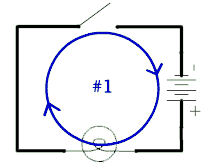
We make electricity by creating an electric circuit. Let's take the case where you are turning on a light in your house: when you flip the switch "on" you are completing the electric circuit and causing electricity and electrons to flow through the light bulb, turning the light "ON."

Here are some key elements to a circuit:
  • Power source: Could be a battery or your wall outlet
  • Conductor: The wires that carry the electricity from place to place
  • Load: what the electricity is powering, like the light bulb in the example above
  • Switch: The switch that connects the circuit together to start the electricity flowing
Is electricity safe?

Electricity can be dangerous. Some important things to keep in mind:
  1. Never play with electricity.
  2. Always follow the instructions on electrical equipment and ask your mom or dad for help if you don't understand.
  3. Never stick anything but a proper plug into a wall outlet.
  4. When you unplug something from the wall, don't pull on the cord, use the plug.
  5. Never put electronic items into the water, especially if they are plugged in.
  6. Don't place items on top of electrical cords. The cords could get damaged and cause a fire.
These are just some safety precautions to take when using electricity. If you are unsure, be sure to check with your parents or teacher.

Energy


Energy

What is Energy?

The simplest definition of energy is "the ability to do work". Energy is how things change and move. It's everywhere around us and takes all sorts of forms. It takes energy to cook food, to drive to school, and to jump in the air.

Different forms of Energy

Energy can take a number of different forms. Here are some examples:
  • Chemical - Chemical energy comes from atoms and molecules and how they interact.
  • Electrical - Electrical energy is generated by the movement of electrons.
  • Gravitational - Large objects such as the Earth and the Sun create gravity and gravitational energy.
  • Heat - Heat energy is also called thermal energy. It comes from molecules of different temperatures interacting.
  • Light - Light is called radiant energy. The Earth gets a lot of its energy from the light of the Sun.
  • Motion - Anything that is moving has energy. This is also called kinetic energy.
  • Nuclear - Huge amounts of nuclear energy can be generated by splitting atoms.
  • Potential - Potential energy is energy that is stored. One example of this is a spring that is pressed all the way down. Another example is a book sitting high on a shelf.
Units of Measure for Energy

In physics, the standard unit of measure for energy is the joule which is abbreviated as J. There are other units of measure for energy that are used throughout the world including kilowatt-hours, calories, newton-meters, therms, and foot-pounds.

Law of Conservation of Energy

This law states that energy is never created or destroyed, it is only changed from one state to another. One example is the chemical energy in food that we turn into kinetic energy when we move.
Renewable and Nonrenewable

As humans we use a lot of energy to drive our cars, heat and cool our houses, watch TV, and more. This energy comes from a variety of places and in a number of forms. Conservationists classify the energy we use into two types: renewable and nonrenewable. Nonrenewable energy uses up resources that we cannot recreate. Some examples of this are gas to run our car and coal burned in power plants. Once they are used, they are gone forever. A renewable energy source is one that can be replenished. Examples of this include hydropower from turbines in a dam, wind power from windmills, and solar power from the sun.
The more renewable power we use the better for our planet and for future generations as they won't run out of resources someday.

Fun Facts about Energy
  • In 2008 about 7% of the energy used in the United States was from renewable sources.
  • A modern windmill or turbine can generate enough electricity to power around 300 homes.
  • People have used waterpower to grind grain for over 2,000 years.
  • Geothermal power uses energy from geysers, hot springs, and volcanoes.
  • The entire world could be powered for a year from the energy from the sun that falls on the Earth's surface in one hour. We just need to figure out how to harness it!

понедельник, 15 мая 2023 г.

What Happens If You're Struck By LIGHTNING?


Light and optics


Light and optics

Light is the kind of energy that makes it possible for us to see. Without light there would be no life on earth. Green plants use the sun’s light to grow and produce food. In this process they produce oxygen, which we need to breathe. Without plants there would be no animals or food.

Light also provides us with fuel. The energy that the sun has sent to earth for millions of years has been stored in plants and then changed into coal, oil and gas – energy that we use today to operate machines and produce electricity and power.

We also get heat from the sun. Without it our planet would be so cold that nothing could live on it. 

Sources of light

All light comes from atoms, tiny particles that make up everything in our universe. When atoms gain energy they give it off as light. An atom that has such energy is called excited.

Some light is natural , like sunlight or light from stars . Other light is produced from things people make, like lamps or flashlights. A light bulb glows because electricity heats a wire inside. Candles produce light from fire when you light them. Lasers are devices that produce powerful beams of light in which all particles have the same energy and travel in the same direction.

There are certain substances that glow in the dark. Their atoms are excited for a certain time and after that they release light. Some insects, like fireflies glow naturally.

Nature of light

For a long time scientists were not sure about how light travels through space. Some thought that light behaves like a wave, others claimed that light particles travel in a straight line. Today, scientists agree that light is an electromagnetic wave made up of electrical and magnetic forces that travel through space at a very high speed. However, light is also a stream of particles called photons, which travel like a beam.

Light waves can be compared to waves in water. They have a wavelength, frequency and amplitude. The wavelength is the distance between the two highest parts of a wave, the frequency is the number of times that a wave passes a certain point every second, and the amplitude is the distance between the highest and lowest points of a wave. 

Electromagnetic waves

Not all electromagnetic waves are visible. Light refers to those waves that we can see.

Light that comes from the sun is basically white. It is made up of all colours. When it passes through a specially shaped glass called a prism it breaks up into different colours. When the sun comes out while it is still raining, we often observe a rainbow because light must pass through raindrops. It breaks up into all the colours of the visible spectrum. Violet light is at one end of the spectrum because it has the shortest wavelength, red light, which has the longest wavelength, is at the other end.

Ultraviolet rays are invisible waves with shorter wavelengths. They cause sunburn and may lead to skin cancer. In small amounts these rays have a good effect on our skin because they produce vitamin D. X rays are even shorter rays that can penetrate a human body. Doctors use them to take pictures of bones and other inside organs.

Waves with lengths longer than red light are called infrared rays. When you stand in front of a fire you feel warm, largely because infrared light is shining on you. Microwaves and radio waves are even longer. Microwaves are used to make food warm. Radio and TV stations broadcast programs by sending out radio waves, which may have a wavelength of up to a few meters.

How light behaves

When light waves strike an object three things may happen. The light can be reflected, absorbed or it may change its direction.

What happens to light depends on the kind of object or material that it hits. Transparent objects, like glass, let light waves pass through without mixing them up. You can see through this material. Translucent material also allows rays to pass through, but it mixes them up so that you cannot see through such objects clearly. Opaque materials don’t let any light pass through. 

Reflection

Most objects do not produce their own light. You can see these objects because light from the sun or from a lamp bounces off them and then travels to your eyes.

Some objects reflect little light, others, like mirrors or water reflect almost all the light because they are smooth and flat. The rays bounce off in only one direction. Reflected light also makes things sparkle and shine. When light shines on a normal object, like a tree, the rays bounce off in many directions.


Refraction

When light passes through an object it slows down because the molecules of a solid object are more densely packed than air molecules. It also changes its direction of travel – it refracts.

Example: Swimming pools do not look as deep as they really are because of the way light is bent. Water slows light down by about 25 per cent and glass slows it down even more. Light waves bend towards the glass, slow down and behind the glass resume their normal speed.

Another example is picking up a stone in water. The stone is not where you think it is. It appears to be farther away than it really is.

Scattering

Scattering shows us what happens when light rays hit atoms, molecules or tiny particles. These particles send off light in new and different directions. Most of the sky is blue because air molecules scatter more blue rays towards us than they do the other colours in sunlight. When the sun reaches the horizon in the evening it looks orange or red because the light that gets to us has lost so many of the other colours through scattering.

Colour

The colour of an object depends on the way it reflects and absorbs light. An object can absorb certain colours and reflect others. The colour that we see is a combination of all the colours it reflects, we can’t see the colours that it absorbs. An apple, for example, looks red because its surface reflects colours from the red end of the spectrum and absorbs the rest.

White objects reflect all colours of light, black objects absorb all colours.

How light is measured

Speed of light

Light travels fastest in empty space, where nothing can block its path. Its speed here is always the same: about 300,000 km per second. The light from the sun, which is about 150 million km away from the earth, reaches our planet in about 9 minutes.

Brightness

The brightness of light is measured in the unit candles, a name that dates back to the old days when wax candles were the only ways of lighting up a room. The amount of light that an object receives depends on how far away the light source is. If a simple candle shines directly on a flat surface that is one foot (about 30 cm) away light has an intensity of one foot-candle. An average 60 watt light bulb emits about 60 foot candles of light. In the metric system we measure the intensity of light in the unit lux. 1 lux is the light that shines on a flat surface one metre away.

Wavelength and frequencies

Scientists measure wavelengths in nanometres, which equals one billionth of a metre. Visible light ranges from 400 nanometres for violet light to about 700 nanometres for red light.

Frequencies are measured in a unit called hertz. A wave has a frequency of one hertz if one crest of the wave passes a checkpoint every second. Because visible light has a short wavelength and a high speed it has a high frequency, Violet light for example has a frequency of 750 trillion hertz. Radio waves, on the other hand have very low frequencies.